
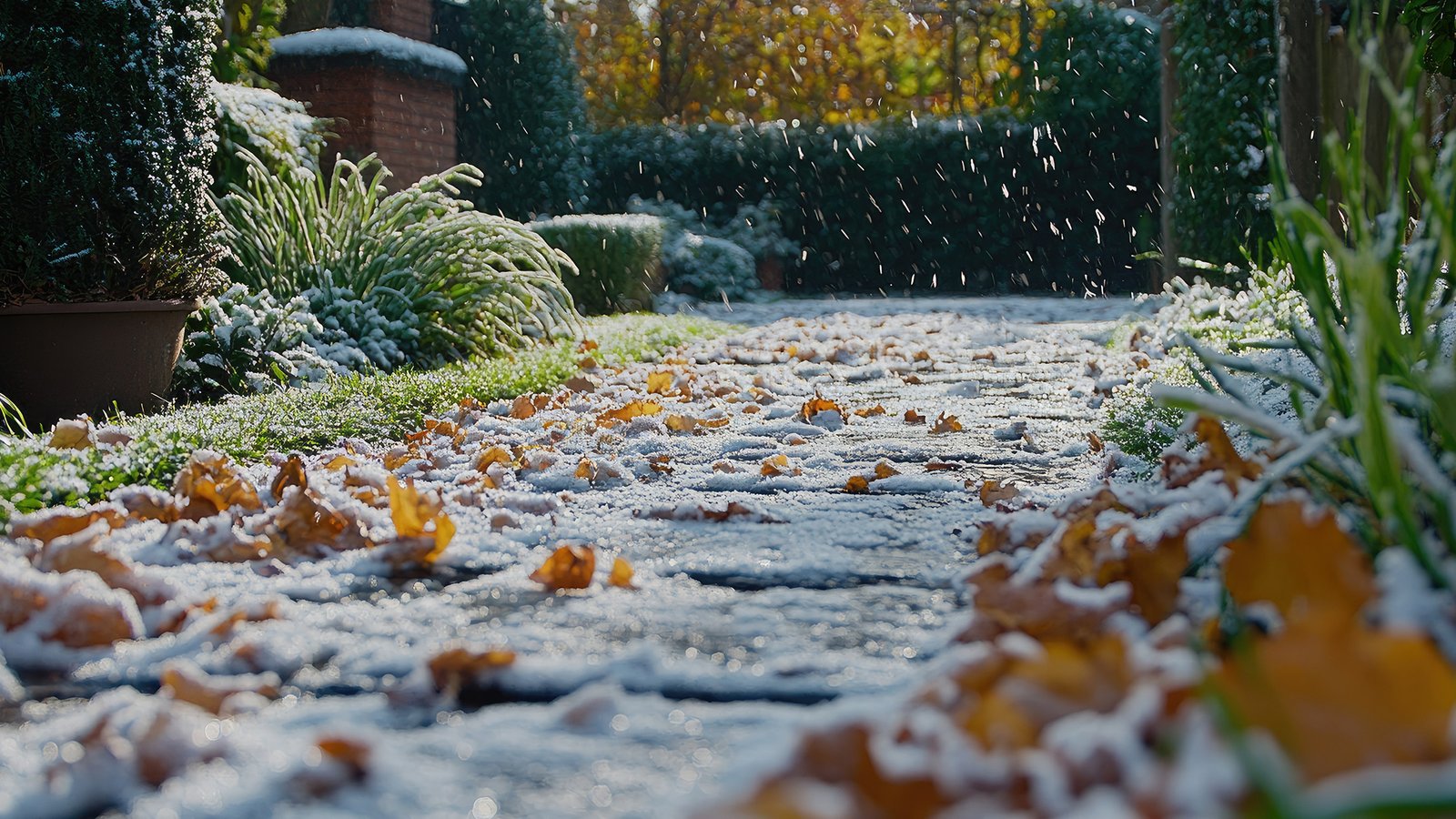
Autumn in New England brings vibrant foliage across the Blue Hills, but for homeowners in Norfolk County, it also signals a critical window of opportunity for property maintenance. While many people assume turf management winds down after Labor Day, any experienced local landscaper knows that autumn is actually the most decisive season for your grass. Understanding how to prepare lawn for winter ma determines whether your yard emerges lush and healthy in April or patchy, weed-ridden, and damaged by disease.
Massachusetts winters are notoriously tough on cool-season grasses like Kentucky Bluegrass, Perennial Ryegrass, and Fine Fescues. Sub-zero temperatures, heavy snowpack, and freezing soil can easily destroy weak root systems. However, by executing a dedicated plan for fall lawn care milton ma, you give your soil and turf structure the exact support required to survive the cold months ahead.
The Critical Role of Soil Decompaction: Core Aeration and Overseeding
Why Norfolk County Soil Needs Aeration Before the Deep Freeze
Throughout late spring and summer, your lawn endures heavy foot traffic, lawnmower weight, and summer heat. Over time, the soil beneath your grass becomes densely compacted, particularly in areas around Milton where clay-rich subsoils are common. Compacted soil starves turf roots by blocking oxygen, water, and vital nutrients from reaching deep into the ground.
Scheduling the core aeration and overseeding massachusetts properties need during September and October is the single most effective way to reverse this compaction. Core aeration uses specialized machinery to extract small plugs of soil and thatch from your lawn. Consequently, these tiny perforations open up direct channels down to the root zone.
When you follow aeration immediately with overseeding, fresh seed drops straight into those open holes. This process guarantees excellent seed-to-soil contact, protecting vulnerable seeds from birds and heavy rain washouts. As a result, new turf establishes deep roots before the ground freezes solid.
Clearing Fallen Leaves: Preventing Snow Mold and Turf Suffocation
The Hidden Danger Under Heavy Leaf Cover
Milton is famous for its mature oaks, maples, and pine trees. However, when those autumn leaves blanket your yard, they create a serious hazard for the underlying grass. Leaving a thick mat of wet leaves on your lawn smothers the turf, blocking vital sunlight during the final weeks of active photosynthesis before winter dormancy.
Furthermore, trapped moisture beneath heavy leaf layers creates an ideal breeding ground for destructive fungal diseases, most notably gray and pink snow mold. Once a heavy snowpack covers wet, decaying leaf litter, fungal spores can spread undetected all winter long.
Therefore, a thorough fall yard cleanup milton homeowners book before the first snowfall isn't just about curb appeal—it is a preventive health measure for your landscape. While mulching a light scatter of leaves returns valuable organic matter to the soil, heavy accumulations must be thoroughly raked or vacuumed away to keep the crown of the grass dry and healthy.
Feeding the Roots: The Science Behind Winterizer Fertilization
Building Root Strength Instead of Top Growth
Fertilizing in late autumn requires a completely different approach than spring feeding. In early spring, grass needs nitrogen to push fast, green top growth. Conversely, late fall fertilization—often called applying a "winterizer"—focuses almost entirely on root expansion and nutrient storage.
A high-quality winterizer fertilizer delivers a balanced blend of nitrogen and potassium. Although top growth slows down as temperatures drop into the 40s, root systems beneath the surface remain active until the ground actually freezes. Nitrogen applied during this specific window is stored in the plant's roots as carbohydrates. Consequently, when spring warmth returns, your lawn draws on these stored reserves to green up weeks earlier without needing aggressive chemical pushes.
Essential Fall Lawn Care Checklist for Milton Properties
To make sure your property is fully protected before New England weather turns severe, follow this practical seasonal sequence:
- Adjust Mowing Height: Gradually lower your mower blade on the last two cuts of the season to roughly 2 to 2.5 inches. Shorter grass prevents blades from matting down under heavy snow.
- Perform Core Aeration: Pull soil plugs while soil temperatures are still above 50°F to encourage maximum root expansion.
- Overseed with Cool-Season Blends: Introduce high-quality, shade- and cold-tolerant seed varieties into newly aerated soil.
- Maintain Regular Leaf Removal: Rake, mulch, or clear fallen leaves weekly to preserve sunlight exposure and healthy airflow.
- Apply Late-Season Winterizer: Feed the root system with a late-fall fertilizer formulation just as active top growth tapers off.
- Blow Out Irrigation Lines: Clear all water from sprinkler systems before the first overnight hard freeze to avoid cracked pipes and backflow valves.
Protect Your Landscape Investment Before the Freeze
Preparing a lawn for a harsh Massachusetts winter requires proper timing, local soil awareness, and commercial-grade equipment. Skipping essential maintenance in late autumn often leads to spending twice as much time and money fixing bare spots, compaction, and fungal disease come spring.
If you want a thick, resilient lawn that bounces back green and strong year after year, partnering with local professionals who understand Norfolk County's unique climate makes all the difference. Contact our team today to schedule your fall cleanup, core aeration, and winterization services before the ground locks up for the season!
Content strategy and optimization by [Grupo Phazes – Digital Marketing].